“Everything we see hides something else, we always want to see what is behind, but that is impossible. People are very careful in guarding their secrets…” (R. Magritte)
The emergence of the “Rooms of Secrets” project was partly influenced by some of artist R. Magritte’s ideas, specifically the concept of mystery. According to the artist, the world guards a secret, hidden from the eyes of ordinary people, and art itself is a mystery. This idea becomes relevant when talking about relationships, including those between neighbors. Sometimes we consciously close ourselves off from those living nearby, while at other times, we seek connection, the desire to be together, to share our secrets, and the longing to understand one another.
What is a secret? Why does the aspect of secrecy become important in our yard?
Our yard is frequently visited not only by individual tourists but also by groups—people from various cultures, perspectives, and life experiences.
While observing the artworks, they often glance at the windows of those currently living here, and sometimes they even step into the stairwells, curiously knocking on doors. Seeing the open, revealed exterior—the yard—makes them want to explore the interior, to learn more. Do they wish to uncover the secrets of this shared existence? The walls of these homes hide many stories, holding the twists and turns of different eras, and the current residents have their own secrets too—we don’t know everything about each other. Sometimes we share secrets when we meet in the yard… but perhaps we don’t even fully know ourselves. This shared existence remains a mystery to us all.
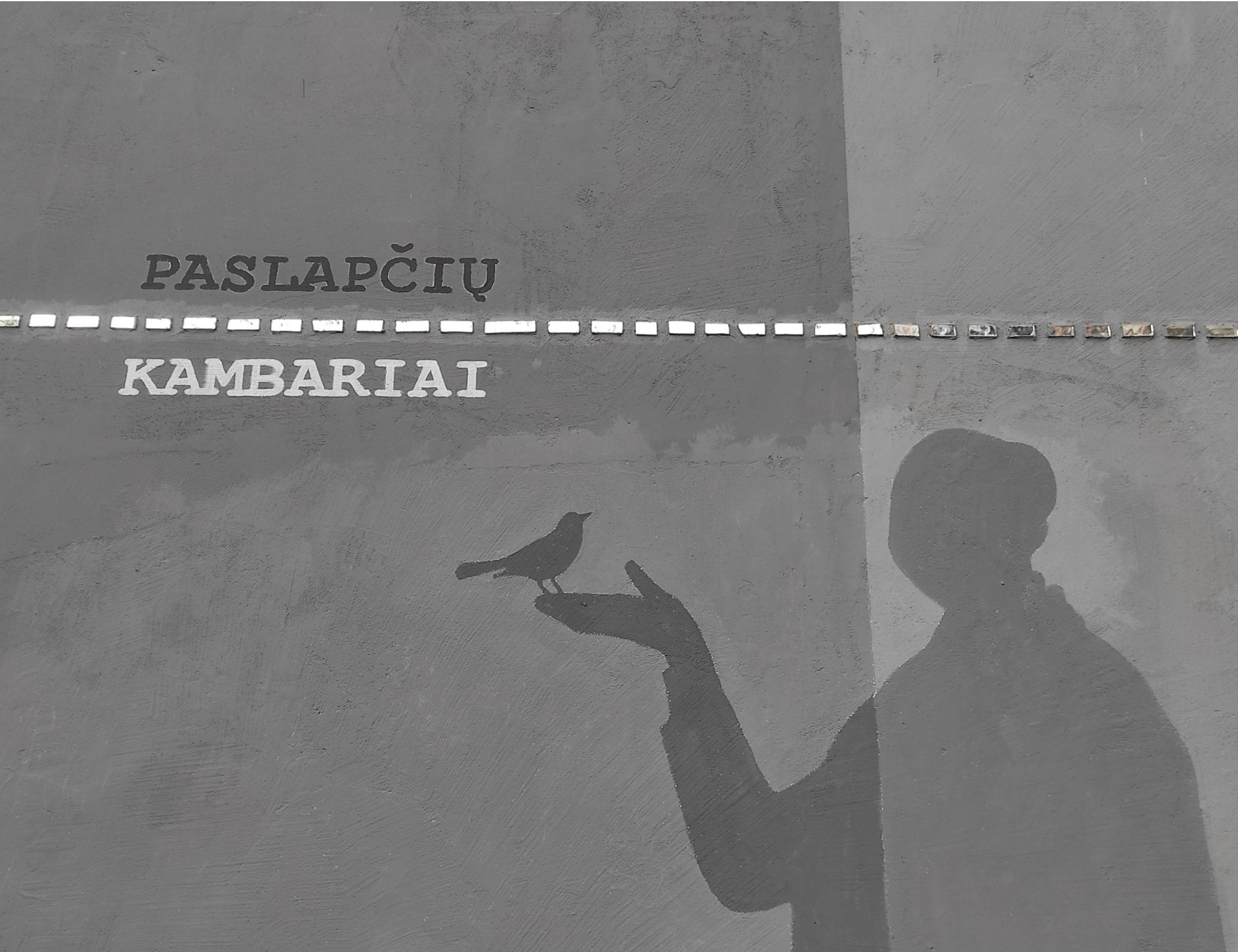

In the artwork “Rooms of Secrets,” the meaning of the confrontation with mystery is constructed through the principle of combining contradictions—depicting three white and three black rooms arranged in a chessboard pattern, spanning three floors. The central theme of all the rooms is the secret, which the viewers of the artwork construct themselves.
(Texts for “Rooms of Secrets” by Prof. Saulutė Juzelėnienė)
Click on each room to learn more about the stories of the people within them.


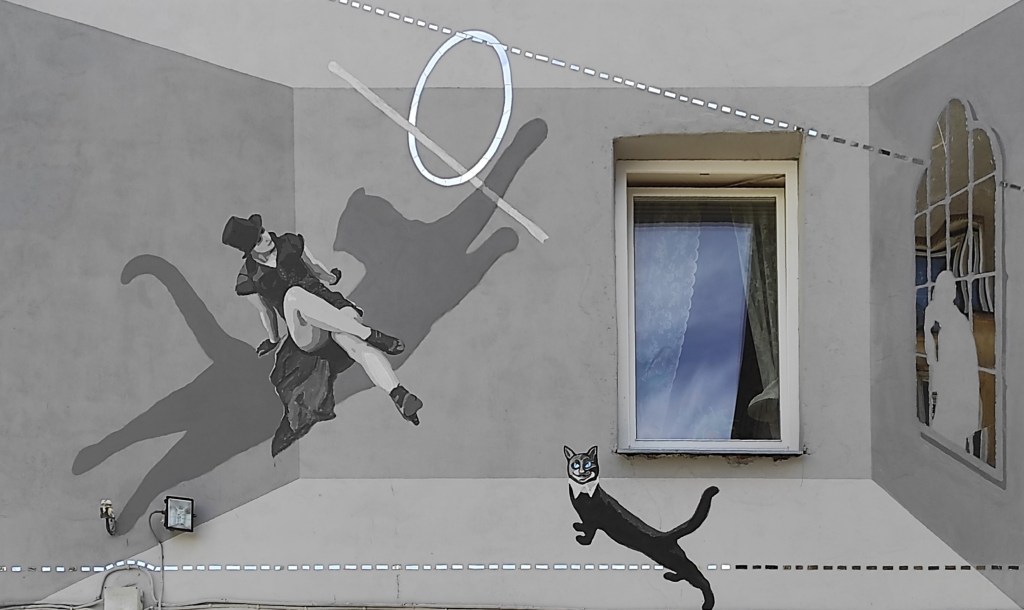
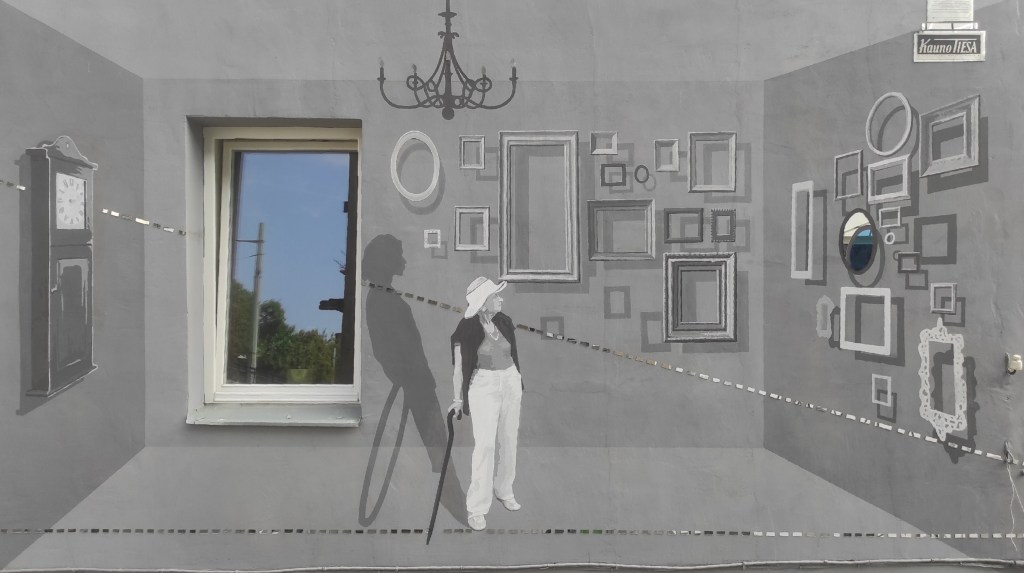


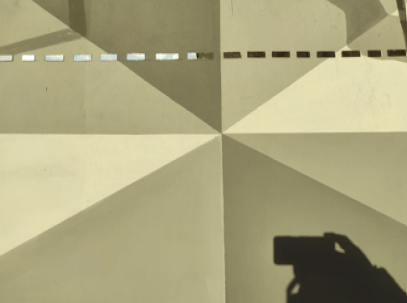
The overall atmosphere of the “Rooms of Secrets” is shaped by intersecting lines marked with dotted mirrors, emphasizing the principle of perspective.
Sometimes even a small dot on the wall can become a meaningful work of art. In this case, the concept of perspective, used by artists from Antiquity and the Renaissance, can be expanded in various directions, encompassing not only linear perspectives but also the universal perspectives of human interaction. Today, contemporary artists share new insights as the world stands on an existential edge—what direction to choose, what perspective is right? In this regard, art, as a powerful creative force, could become a tool for promoting human connection and awareness.
 Kiemo Galerija