
„In the Room of Bella, Sveta, and Saulė“ – seeing, knowing, and believing create meaningful unity. The work depicts three different women and a little girl named Una. Each of them, in their own way, creates mysterious perspectives of their own lives.
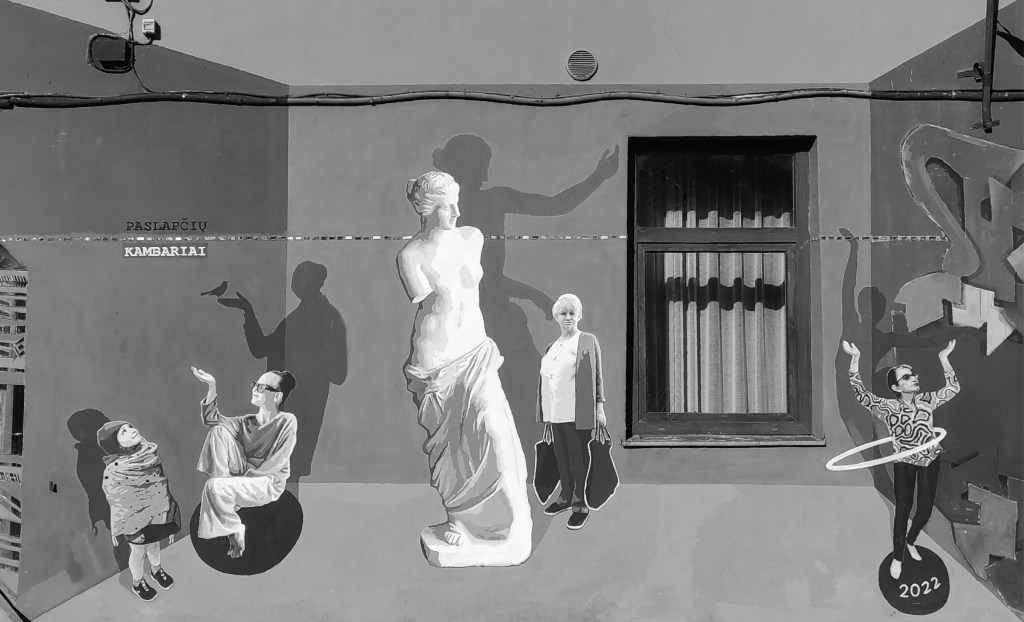
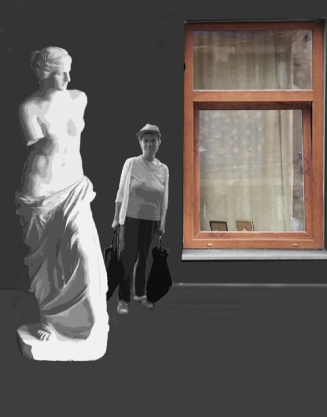
Sveta has already passed away, so this painting also preserves her memory. Every day, the woman cared for her disabled husband, bringing him food, looking after him… Neighbor Sveta, laden with baskets, metaphorically questions the multifaceted concept of feminine charm and self-sacrifice for others…
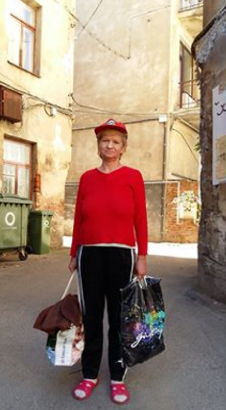
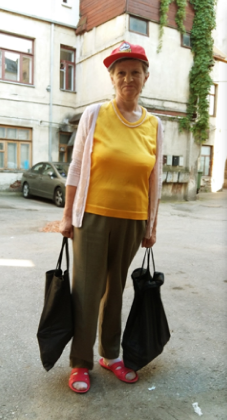
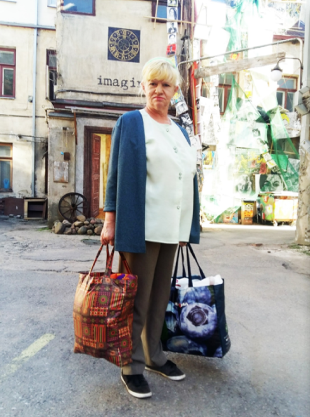
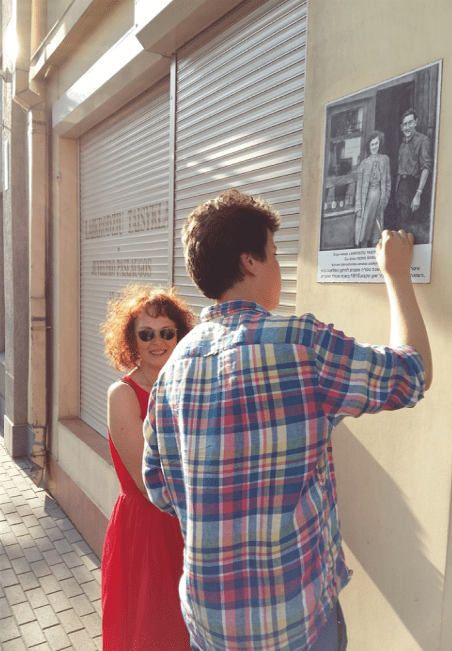
„The parents of artist Bella Shirin (before emigrating—Šifrisaitė) miraculously survived the Dachau concentration camp. After the war, they settled in Kaunas, where their daughter Bella was born and raised. At the age of seventeen, she emigrated to Israel with her parents (in 1963), but she always deeply missed her homeland. She first returned to Kaunas in 2004, and in 2016 she came back permanently and… finally felt happy again. Today, the artist lives next to her childhood street—in the Yard Gallery—and every day she cares about bringing Jews and Lithuanians closer together…“
In the photograph on the wall of the oldest still-operating clock repair shop, there is a painting titled „Portrait of the Watchmaker’s Family“, which depicts Bella Shirin’s parents (artist Vytenis Jakas, 2015).
Bella, an ambassador of KEKS 2022, whose life story, activities, and positive outlook inspire many of us to enjoy each day—even small things—as a gift. Her character is depicted on a black ball, somewhat modified in the artwork and resembling a shadow, which has become a symbol of KEKS. Standing on the ball, spinning a hoop around her waist, Bella dances the dance of her life. Balancing is aided by her arms raised upward and her gaze always directed skyward… after all, even an angel doesn’t perch on drooping shoulders—let’s always look forward bravely, and when we’re sad or in pain—let’s sing, let’s dance, and the sadness will pass…

Next to Saulė is a girl named Una, wrapped in a cloak of stars, looking upward. The interaction between the characters of Saulė and Una, who are gazing at something mysterious, visible only to them, and smiling, creates a sense of mystery—Saulė extends her hand to a little bird, which is gently held behind her by the shadow of an older woman…
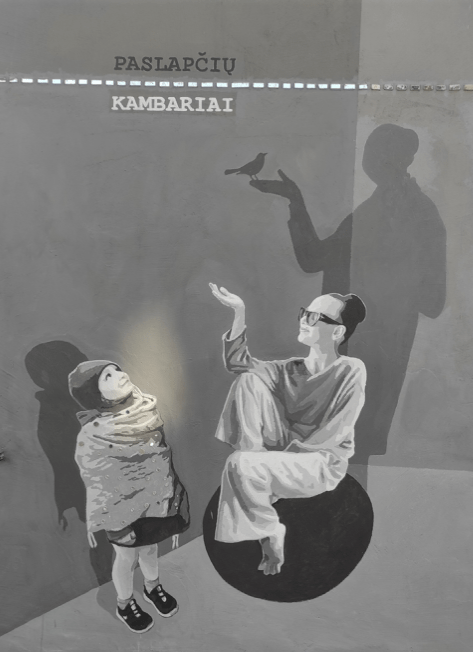
All the characters in the room are connected by the motif of the shadow, reflecting the profile of the “Venus de Milo” depicted at the center of the work. As a symbol of beauty, Venus was and probably still is the aspiration for women’s physical perfection—albeit without arms…
So, we are all perfect and beautiful in our own way; each of us is connected uniquely by the unity of being, femininity, gentleness, love, and the pursuit of the ideal of beauty.
 Kiemo Galerija